

It’s 5:17 AM, the world is dark, silent, and peaceful. Suddenly, a paw pats your face. Gently at first. Then with the insistence of a tiny, fluffy mob boss demanding protection money. You try to ignore it, pulling the covers over your head. This is followed by the unmistakable sound of a cat systematically knocking every single item off your nightstand. You know the drill, the overlord demands breakfast, and your sleep is the price.
It’s 6:30 PM, you’re stuck in traffic, and a wave of guilt washes over you. Your dog, Bartholomew, is at home, staring at his empty bowl, his dinner officially 30 minutes late. You imagine his sad, soulful eyes and feel like the worst pet parent on the planet.
Yep, the feeding-time dance is a tricky business. It’s a core part of our bond, but our modern lives don’t always sync up perfectly with our pets’ internal clocks. Enter the smart feeder: a gadget that promises a world of automated, on-time meals and blissful, uninterrupted sleep. But it also opens a Pandora’s box of questions. Will my cat think it’s a hostile alien? What if the Wi-Fi dies? Is it lazy to outsource the one thing my pet loves most from me?
Deep breaths. We’ve got you. Let’s cut through the marketing jargon and the tech anxiety to figure out if these robot butlers are right for you and your furry friend.
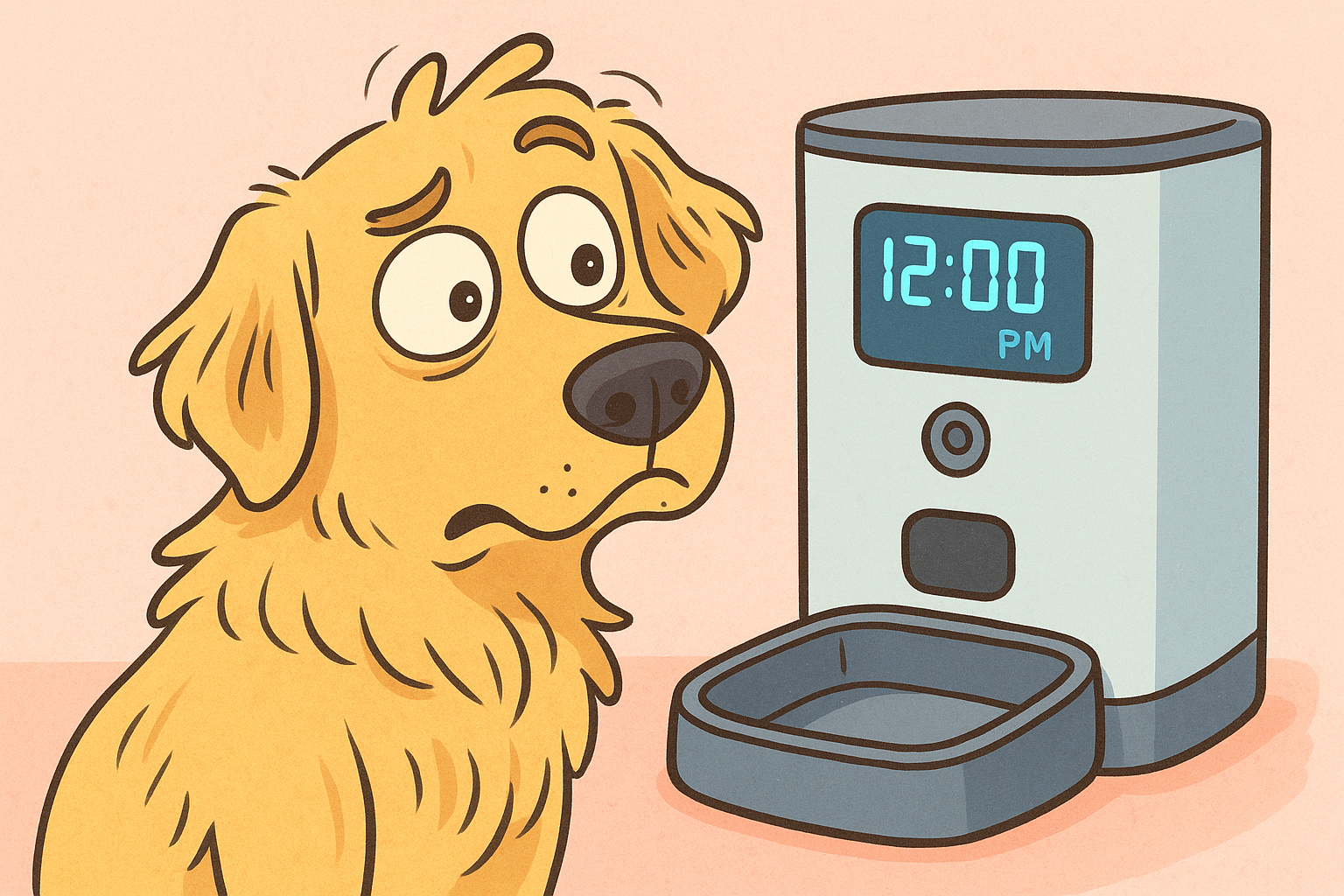
What in the World Is a Smart Feeder, Anyway?
At its heart, a smart feeder is just a food container with a timer and a dispenser. It’s the evolution of that giant gravity feeder you had in college, but with a brain. Instead of dumping a mountain of kibble for a free-for-all, a smart feeder releases a specific amount of food at a specific time.
They generally fall into two categories:
- “Dumb” Timed Feeders: These are the straightforward workhorses. You set a schedule on a little digital screen directly on the device. They’re reliable and don’t need an internet connection. Simple.
- “Smart” Wi-Fi Feeders: These are the ones that connect to an app on your phone. You can set and adjust feeding schedules from anywhere, get notifications that your pet has been fed, and sometimes even see your pet via a built-in camera or call them to dinner with a recorded message.
The main promises are all about consistency and portion control. And for many of us, that’s a game-changer.
Why You Might Actually Love One
Before we get to the worries, let’s talk about the moments where a smart feeder feels less like a gadget and more like a little miracle.
- Reclaiming Your Mornings
This is the big one. If your pet has trained you to be their personal 5 AM alarm clock, a feeder can untrain them. When the magical food robot becomes the source of the morning meal, you are no longer the target of those pre-dawn demands. They’ll learn to wait by the feeder, not on your face. More sleep for you, less stress for them. It’s a win-win. - The Unbiased Portion Control Police
According to the Association for Pet Obesity Prevention, over half of our dogs and cats are overweight. It’s so easy to give in to those puppy-dog eyes and add “just a little more” to the bowl. A smart feeder is a heartless, unbiased machine. It doesn’t care about sad whimpers. It dispenses the exact portion you set, every single time, making it an incredible tool for managing your pet’s weight and health. - Peace of Mind for the Busy Human
Life is unpredictable. A meeting runs late, you get stuck in traffic, or you want a spontaneous dinner out with friends. A smart feeder removes the feeding-time guilt. You know your pet is getting their meal right on schedule, which lets you live your life with a little more flexibility and a lot less anxiety. For pets who thrive on routine, this consistency can be incredibly comforting. - The Multi-Pet Referee
Got a food-stealing cat or a dog who inhales their sibling’s dinner? Some high-tech feeders use your pet’s microchip or a special RFID tag on their collar to open only for the right pet. It’s like a personalized, high-security diner that ensures everyone gets their own meal and only their own meal. It’s a brilliant way to manage complex feeding needs in a multi-pet home, a topic the Humane Society knows a thing or two about.

When a Smart Feeder is a Dumb Idea
Okay, it’s not all sunshine and perfectly portioned kibble. These gadgets aren’t for every pet or every home.
- Your Pet Has Serious Tech Anxiety: Some animals are naturally neophobic (afraid of new things). The whirring sound of the motor or the sudden clatter of kibble can be terrifying for a timid cat or a noise-sensitive dog. For them, a scary food monster is not going to be a welcome addition to the kitchen.
- You’re a Wet Food Family: This is a major limitation. The vast majority of smart feeders are designed for dry kibble only. If your pet eats wet, raw, or fresh food—which many vets at places like the Cornell Feline Health Center recommend for hydration—a standard smart feeder is a non-starter.
- You’ll Miss the Ritual: For many of us, feeding time is a key moment of connection. It’s a quiet ritual where we check in with our pet, see that they’re feeling well, and share a moment of affection. Automating this can feel like you’re removing a piece of that bond. A machine can deliver food, but it can’t deliver a loving ear scratch.
- The Wi-Fi Nightmare: The number one question we see is, “What if the internet goes out?!” It’s a valid fear! Thankfully, most good Wi-Fi feeders store the schedule locally and have backup battery power, so they’ll still dispense food even if your connection drops. But if you live somewhere with spotty power or internet, a simpler, non-Wi-Fi model is a much safer bet.

Okay, I’m In. How Do I Choose One Without Losing My Mind?
You’ve weighed the pros and cons and decided to take the plunge. Welcome! The market is flooded with options, but you can narrow it down by asking a few simple questions. Think of it as a dating profile for your pet’s new food dispenser.
| Feature to Consider | Why It Matters |
|---|---|
| Capacity & Portion Size | A feeder for a Yorkie is very different from one for a Great Dane. Check that the hopper is big enough and that the portion sizes are adjustable enough for your pet’s needs (from a tiny snack to a full meal). |
| Power Source | Plug-in only? Battery only? Or the gold standard: both? A dual-power option with battery backup is essential for ensuring your pet gets fed during a power outage. |
| Ease of Cleaning | Let’s be real: these things can get grimy. Look for models with a removable, dishwasher-safe bowl and hopper. Your future self will thank you. |
| Kibble Compatibility | Some feeders are picky and can jam if your kibble is too large, too small, or an unusual shape. Check the manufacturer’s recommendations to make sure it works with your pet’s brand of food. |
| Tech Features | Be honest with yourself. Do you need a 1080p camera and two-way audio, or do you just need a reliable timer? Sometimes simpler is better. For detailed shootouts, review sites like Wirecutter are your best friend. |
The First Date: Introducing Your Pet to Their New Robot Butler
You wouldn’t push a new friend on your pet, so don’t push a new feeder on them either. A slow, positive introduction is key. The experts at Fear Free Pets would agree that making new experiences positive is crucial for a pet’s well-being.
- The Casual Meet-and-Greet: For a couple of days, just leave the feeder out, turned off and empty, in their feeding area. Let them sniff it and get used to its presence without any pressure.
- The Appetizer Course: Place a few of their favorite treats or a little bit of kibble in the bowl of the unplugged feeder. Let them eat from it as if it were a normal bowl.
- The First Magic Trick: While you’re sitting with them, manually dispense a small portion of food. Be there to offer praise and reassurance when the food appears. You want them to associate the sound and the machine with a positive reward.
- Go Slow: Start by using the feeder for just one meal a day while you handle the other. Gradually transition to the automated schedule once they’re comfortable.
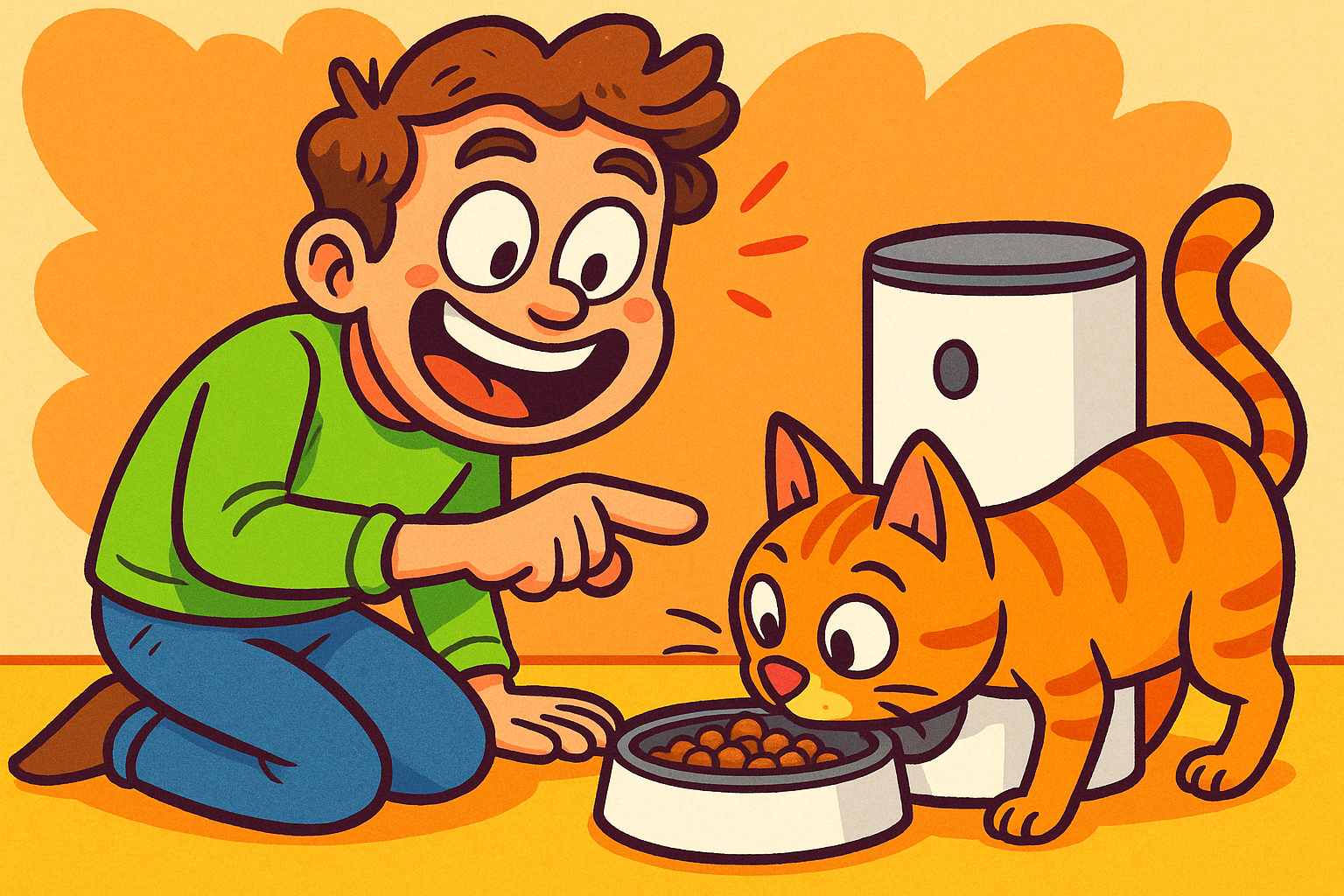
More Than Just a Gadget, It’s a Tool
In the end, a smart feeder isn’t a replacement for you. It’s a tool, just like a good leash or a fun puzzle toy. When used thoughtfully, it can lower your stress, improve your pet’s health, and give you both a little more freedom and consistency. It solves the logistical problem of when and how much to feed, which frees you up to focus on the more important parts of your relationship: the walks, the cuddles, the games of fetch, and the quiet moments of connection.
The goal isn’t to automate the love out of our lives. It’s to handle the logistics so we have more time for that love.
Now it’s your turn! Do you have a smart feeder? Is it your home’s greatest hero or a comedic villain? Does your dog stare at it lovingly, or does your cat plot its demise?
Share your hilarious stories, tips, and gadget reviews in the comments below. We want to hear all about it!


 ThePetRealm
Leave a comment